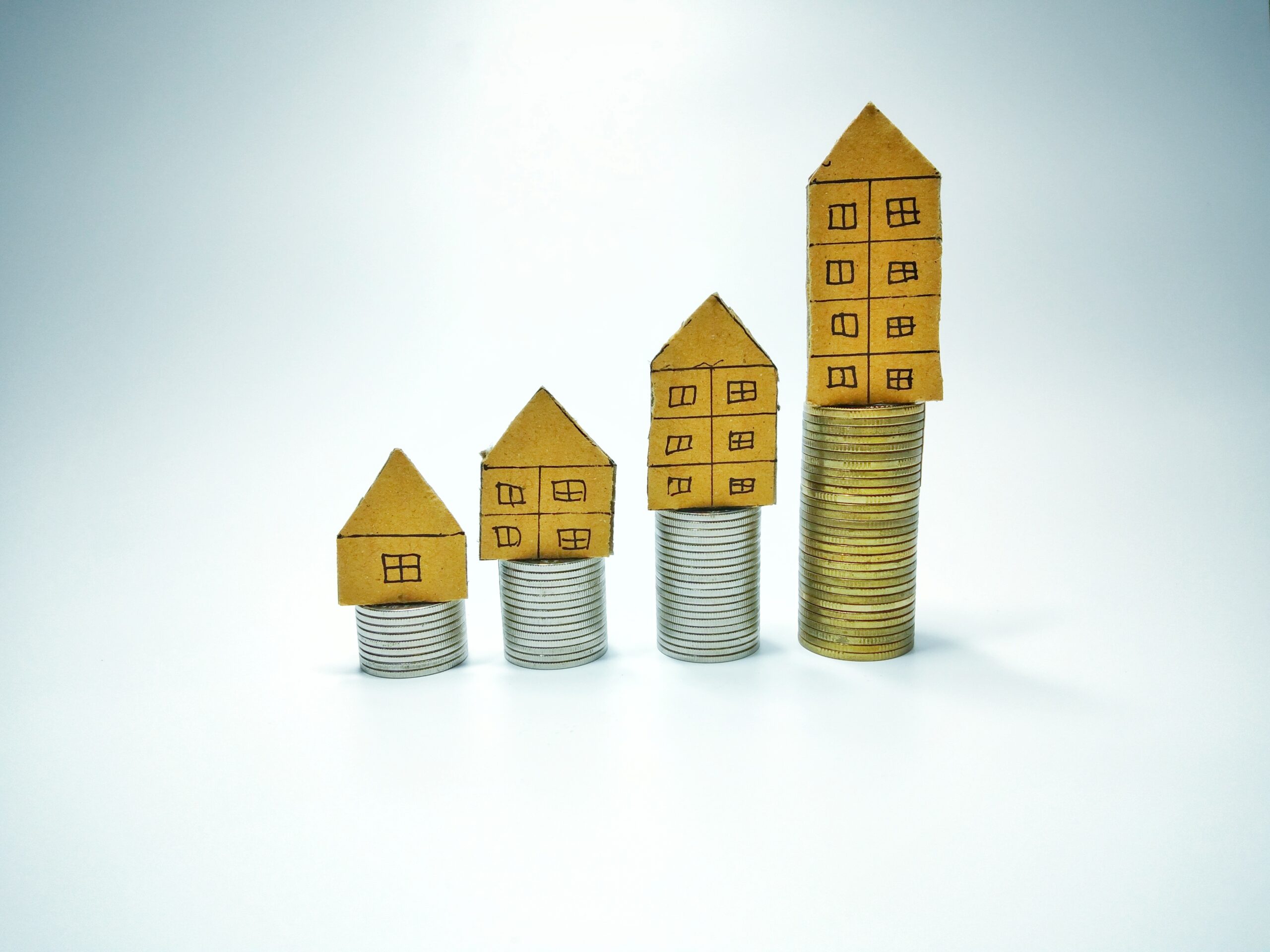

The article below relates to the situation in the Czech Republic with a comparison being made to the United Kingdom.
Rent prices increased between 2015 and 2024 sharply in comparison with a salaries increase during the same time period. An ideal ratio of monthly expenses is 1/3rd of the salary paid for a rent and utilities (all expenses related to accommodation), 1/3rd for food and daily expenses and 1/3rd to save up for unexpected circumstances, holidays and so on.
The article brings multiple viewpoints on the issue of expensive housing. It presents aspects and influences, which have an impact on the current housing crisis as well as possible solutions.
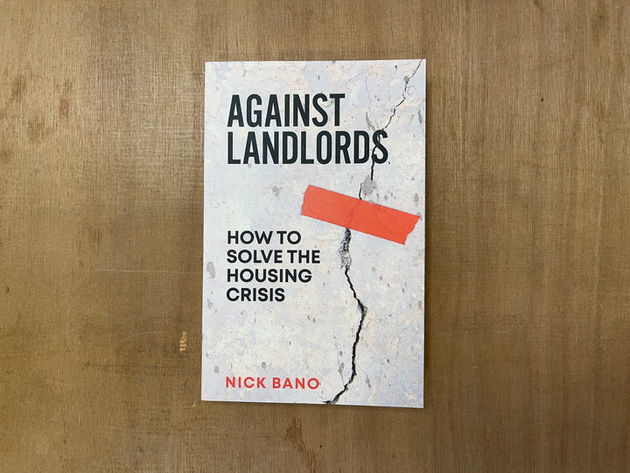
The article is based on a book Against Landlords by Nick Bano. The book describes the same situation in the United Kingdom and their problems with expensive housing. The book deals with a period of time when the real estate market was regulated. The regulation didn’t motivate investors to buy up properties (flats and houses) in the interest of making a profit. Most properties which could be rented were owned by city councils. After that Margaret Thatcher was elected as the prime minister. She deregulated the market. It caused unlimited buying up of properties and expensive reconstructions for profit by investors. A direct consequence was a continuous increase of rent prices (the current situation in the United Kingdom) sometimes exceeding capabilities of ordinary people to afford to rent anything at all. By affordance, I mean the ratio between a rent and a salary. In some cases, the rent can exceed a monthly salary.
How much should we earn so 1/3rd of salary goes to housing expenses
The minimum salary (monthly) is 17 873 CZK net (20 800 CZK gross) and the average one is 38 692 CZK net (49 229 CZK gross). Let’s say that the golden average is 28 282 CZK (35 050 CZK gross).
| Net salary | Gross salary | 1/3 expenses for the rent |
| 17 873 CZK | 20 800 CZK | 5 957 CZK |
| 38 692 CZK | 49 229 CZK | 12 897 CZK |
| 28 282 CZK | 35 050 CZK | 9 427 CZK |
It implies that for the housing expenses (rent, utilities) should be spent between 5 957 to 12 897 CZK.
As stated below, I show rent prices of a one-room flat in Prague (an expensive area) including utilities (electricity, gas etc.) and in Ostrava (a cheap area).
Rent prices of the one-room flat in Prague range from 15 000 to 25 000 CZK per month. An average price of utilities based on adverts on sreality.cz and from statistics on numbeo.com range between 2500 to 5000 CZK.
Rent prices of a one-room flat in Ostrava range from 8000 to 13 000 CZK.
| City | Total costs of living |
| Prague | 17 500 to 30 000 CZK |
| Ostrava | 10 500 to 18 000 CZK |
| Augsburg, German | 19 000 to 23 000 CZK |
Let’s calculate an average from the figure in the table above. The average for Prague is 23 750 CZK. It means that if you would like to fulfil the 1/3 requirement, your salary had to be 71 250 CZK net (93 600 CZK gross) per month.
The average for Ostrava is 14 250 CZK. It means that if you would like to fulfil the 1/3 requirement, your salary had to be 42 750 CZK net (54 750 CZK gross) per month.
There is also an additional comparison of Prague with Augsburg, Germany. The comparison implies that rents are 13,3 % lower in Augsburg in comparison with Prague. The minimum gross salary in Germany is 55 144 CZK and the average gross salary is 107 281 CZK.
Number of flats vs number of inhabitants
Based on economic theory, there is offer and demand on the market. They influence each other. The offer is what companies and owners offer (goods, services, properties) for customer to buy. The amount of goods, services and properties which customers want to buy is the demand.
If there is a shortage of goods, prices rise. If prices are higher, the lower number of people buy the goods. It causes there won’t be a shortage.
On the other hand, the offer can very high and the demand is low. In this case, one of consequences of this state is that companies lower their prices so as to increase sales. It also lowers their costs for warehousing.
The number of people living in the Czech Republic increased by 355 657 from 2015 to 2024. 297 700 housing units were built during the same time period (Data taken from the Czech Statistical Office). Let’s assume that one housing unit (a flat) is for more than one person. We can come to the conclusion that the offer difference exceeds the demand difference. It implies that rent prices should fall or stay the same at least. Does it mean that the basic economic theory mentioned above doesn’t work?
The reasons influencing this state on the offer side are: short-term leases (Airbnb), buying up properties by investors and speculators, housing reconstructions, a certainty of a good investment and related unlimited increasing of rents. Let’s talk about these further below.
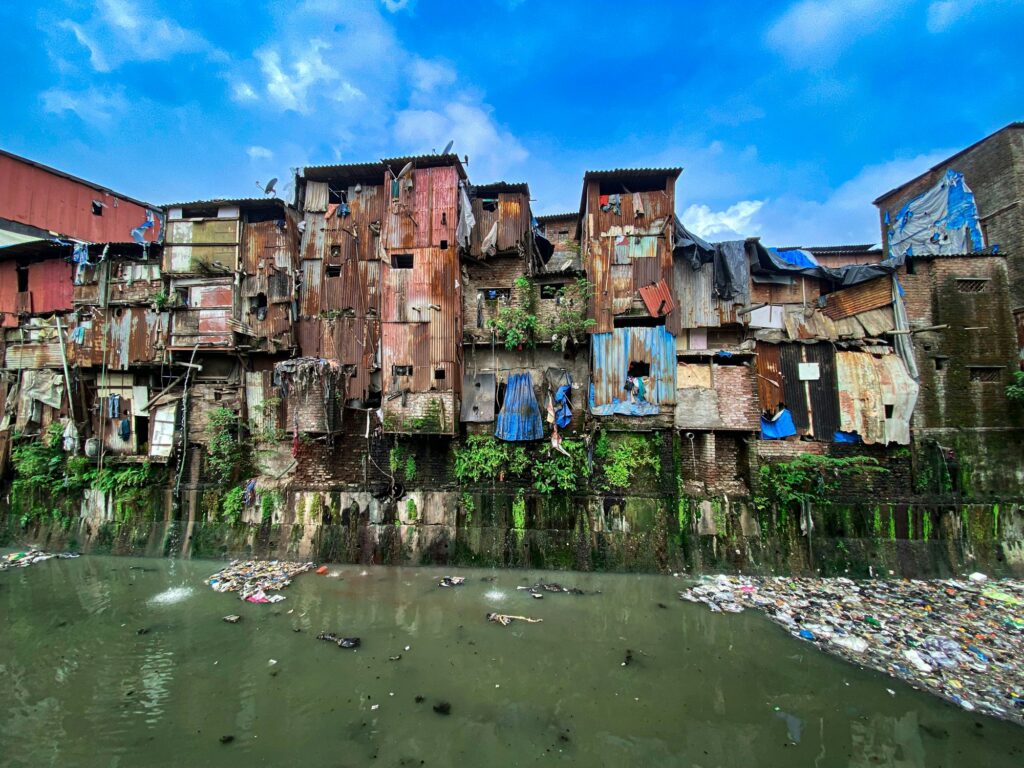
The reasons influencing this state on the demand side are: not enough money to pay a rent, unwillingness to live in very bad accommodation (An owner offering a mouldy basement without windows as a picturesque flat.)
Short-term leases
The first problem are short-term leases. There are among them Airbnb. The Airbnb has around 7 930 offerings in Prague. Another one are apartments being rented short-term to tourists.
An example: I recently stayed over a 1+kk apartment in Brno. I stayed there for one night and paid 1 250 CZK / night. If the apartment was fully booked the whole month, it would make 38 125 CZK. It follows that when it is only booked for 1/3 of a month (12 708 CZK / month), it is already profitable for the owner.
Due to these aspects, there are tens to hundreds of thousands of flats missing on the offer side.
Housing (Living) vs investment
Many companies invest in properties. They see it as reliable business. You don’t have to try much (It is enough to have money). Living is a basic human need which can’t be abstain from. Rents have been continuously rising. Due to buying up properties for an investment and repeated renting, there can be many flats missing for ordinary people to buy.
I have come across at least one company in Prague which rents apartments to tourists. The company owns 260 flats. I came across it by coincidence. They offered a job position “Customer care specialist” for their customers. Of course, the salary they were offering was not enough to rent the flats which they own.
Another problem is reconstruction of flats. Many flats and houses which don’t need reconstruction necessarily are reconstructed anyway. It is done to make way for accommodation for a higher class of people. In reality it displaces classes which lived in these areas. The reason is they can’t afford to pay for the newly reconstructed flats.
From the investor’s point of view, the reconstruction costs money (expenses) and the final product (a reconstructed flat) can’t be rented below the expenses plus a fat profit. Expenses for reconstruction are quite high nowadays.

Situation in Great Britain
They dealt with the same issue of an unlimited increase of rents in the United Kingdom as well. In the past, they had a problem that owners of properties were increasing their rents up to the point when people couldn’t afford to live and pay for them. The solution for it (1960-79) was to cap rents and offer (the Civil Service city councils) property entrepreneurs to sell their properties to the state. When rents were capped (by the state), entrepreneurs realised it wasn’t worth renting properties. Rents were lower than expenses for owning flats. It means they would rent their flats with a loss of money. That made them sell their flats to the state. City councils took care of the flats. During its peak of success (the law), only 7 % of flats were owned by investors and speculators.
When Margaret Thatcher became the prime minister of the United Kingdom, everything changed. Her government decided to go in the direction of Laisser faire economy. To translate it to standard language, she cancelled the law regarding rent limits. It caused majority of flats being bought up by speculators and investors again because it was worth it.
More about Laissez faire on Wikipedia. For quibblers who claim the Wikipedia is no good, see the same article on Encyclopædia Britannica which is edited by academics and scholars.

Capping rents vs social housing allowance
Social housing allowance is offered by the state in both the Czech Republic and the United Kingdom. It is supposed to offset the difference between salaries and rents. How does the allowance influence rent prices and behaviour or landlords? There is not any study I know of about it in the Czech Republic. However, it causes that landlords (investors, speculators) increase their rents every time the social allowance is increased. The owners know about the allowance and adjust their rents (up) accordingly. It means that the original target of helping people who don’t have enough money to pay rents has been lost / forfeit. Tenants are still in the same situation. Owners of flats and investors are happy. The state gives them free money.
Digitalization of building permit process
How could we build more flats? The building permit process is very protracted in the Czech Republic. There is a lot of paperwork and red tape. Digitalization of the process can speed it up. By speeding it up, more housing units could be built. Thus, increasing the offer on the market. That is the reason why I was surprised when Ivan Bartos, who was in charge of the building permit process digitalization, was removed from the office.
It is probable that the removal has caused another prolongation of development of the digitalization of it. As a consequence, it has influence on the number of new housing units built. This causes lowering the offer on the market which causes an increase in rent prices as I mentioned the beginning of the text. Who could profit from such circumstances? Let’s guess together! Owners of flats, investors and speculators.
If I lived in the USA or in the United Kingdom, I could formulate a hypothesis that there is a powerful group of investors putting pressure on the government to slow down the process. It is due to the fact that the housing market is commodified and properties are more owned by corporations than in the Czech Republic. However, most flats in the Czech Republic are owned by ordinary people like me and you. No Rothchild or Illuminati. Thus, I don’t understand the lack of the political will to change it.
Interconnectedness of house sale prices and rents
Property prices are linked with rent prices. Investors think about whether to sell or rent flats. They calculate if it is more beneficial for them to sell or rent in the long-term. If a selling price increases (and investors could sell it for a better price), rent prices react by an increase and vice versa.
Solution
Imagine you own a company and think about how to reward your employees financially so they are motivated to work well – as an individual and as a team. 30 % of a salary / rewards are not fixed. There are 3 options how they can get the 30 %:
- The floating part is based on their personal achievements,
- The floating part is based on the overall profit of the company regardless of their personal achievements,
- The floating part is based on both, their personal achievements as well as on the overall profit of the whole company.
Version No. 1) It is probable that employees in a team will start competing among each other and reach their own personal targets bloodthirsty.
Version No. 2) It is probable there will be a few hard workers who will work hard and dutifully in a team. They will do most of the work. The rest will slack and do nothing, because they know the hard workers do all the work.
Version No. 3) It implies that No. 3 may be the best choice.
What I want to communicate is that by economic regulation it is possible to control and regulate human behaviour. Either in the worse direction (Version No. 1 and 2.) and in the better way (Version No. 3).
The aforementioned conclusion is applicable to any area which is intertwined with money and economy. It encompasses real estate market as well.
Airbnb is not what is used to be and the original idea (To rent an empty room in my house to make a few bucks) has been totally lost.
Social housing allowance tends to increase rent prices.
Investors, speculators and owners of properties can’t help themselves. As long as they envision a beautiful holiday in the Caribbean on a luxurious cruise ship in a cabin bigger than the picturesque basement flats which they rent themselves, they are lost cases.
Bases on the text above I suggest capping rent prices as a solution and those who break it punish. Confiscating their flats for a certain time period may be a good solution. It may be too hard. However, let’s look at the middle age. When a thief had his right hand chopped off, it was likely, they wouldn’t steal with the right hand again. In addition, this solution (capping rent prices, not chopping off hands) has proved to be the right one in the book Against Landlords by Nick Bano book.

Let’s look at it from the public good perspective. It is in the public interest to fulfil basic needs of citizens. There is also another option. Leave the issue without effective measures. Salaries have been stagnating (or even falling) and rent prices have been rising. If it goes on like that, it will reach a psychological breaking point for a big proportion of society. As we know from the historical books, when people don’t have food to eat and a place to sleep, they do revolutions.
What is your situation like? What’s your ratio between a salary and a rent? Which solutions do you suggest? How do you deal with such a situation?
Write your comments down in the discussion section please.